Press
A new pacing app that turns wearable data into personalized insights for chronic illness.
For people living with ME/CFS, Long COVID, POTS, fibromyalgia, and related conditions.
Download the fact sheet (PDF)The app
The problem
For people with energy-limiting chronic illnesses, the effects of overexertion aren't always immediate. Physical or cognitive activity can lead to a delayed worsening of symptoms, sometimes a day or two later. Someone may feel relatively well while pushing past their limits, only to experience the consequences much later. This delay makes pacing difficult: by the time the body responds, it's often too late to connect the symptoms to what caused them.
What it does
Heedly brings together wearable signals, symptoms, and daily activities to help people better understand their individual patterns.
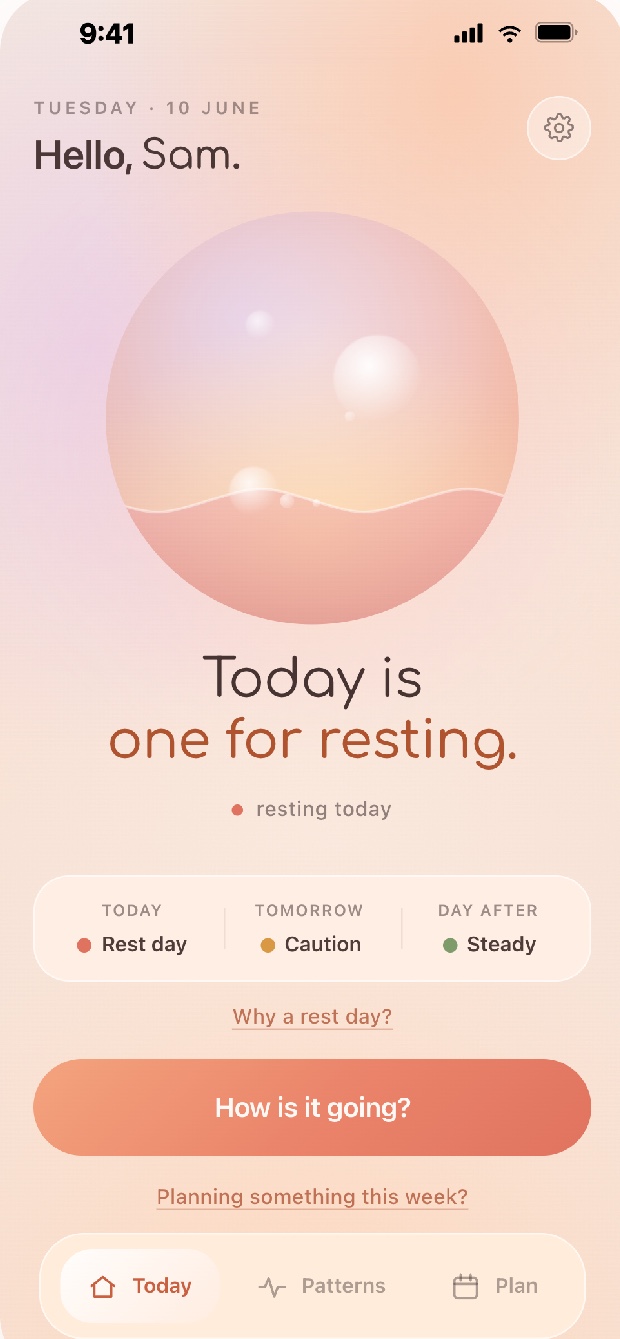
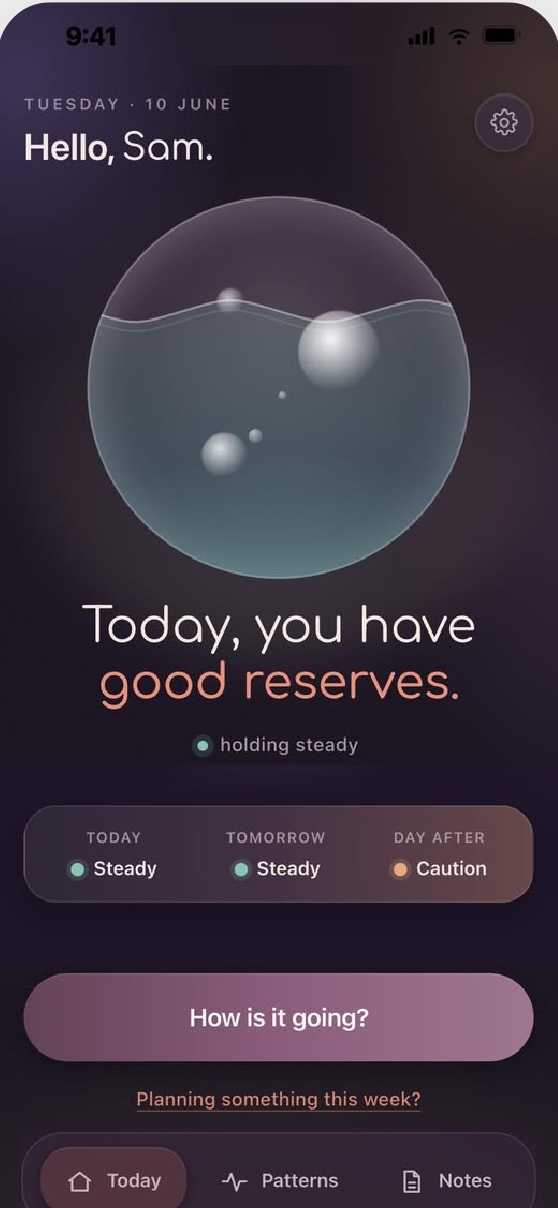
The app provides a personalized three-day pacing outlook, highlights changes that may warrant additional rest, and helps people explore which activities may be associated with symptom worsening or better days.
How it works
Works with compatible devices that sync to Apple Health, including Oura, Apple Watch, Garmin, Fitbit, and more.
Analyzes changes in HRV, resting heart rate, sleep, and other available signals to establish a personalized baseline and highlight patterns that may be relevant to pacing.
A quick daily check-in adds context about symptoms and activities, helping people discover possible connections between their routines, physiological signals, and how they feel.
Designed for the worst days
Daily check-ins take approximately 30 seconds, with a one-tap "I'm in a crash" option for days when even answering a few questions feels overwhelming. Dark and OLED modes offer a lower-brightness interface.
What makes it different
Looks ahead. Rather than only recording symptoms after they happen, heedly uses recent trends and personal patterns to provide a forward-looking three-day pacing outlook.
Identifies possible triggers and what helps recovery. By connecting daily activities, symptoms, and wearable data, heedly helps people spot patterns in what may worsen their symptoms and what may support better days and recovery.
No new hardware. Works with compatible wearables people already own, using data they are already collecting. Heedly can also be used without a wearable through manual check-ins.
Why it exists
The founder has lived with ME/CFS for over a decade. After a seemingly good week left her recovering for a month, she began questioning whether her wearable data could have helped her recognize changes in her body's patterns earlier.
Her ring had collected data throughout, but it had no idea what a crash was.
Her background is in health technology, with multiple patents and recognition from MIT Technology Review as one of its Innovators Under 35 in biotechnology and medicine. She created heedly to build the tool she needed and couldn't find.
Privacy
Heedly doesn't use AI or cloud-based analysis. Heedly's pacing engine runs locally on your device, computing your patterns for you alone. We don't sell your data, and you can export or delete it anytime. Read the full privacy policy.
Status
Currently in closed iOS beta, with a public launch planned for early 2027.